Drinking Water Treatment Plant
Purpose of a drinking water treatment plant: Raw water (untreated natural water) may contain microorganisms, turbidity, color, bad odor, heavy metals, and other harmful or unwanted substances. The purpose of the treatment plant is to remove these elements and produce clean, healthy, and drinkable water.
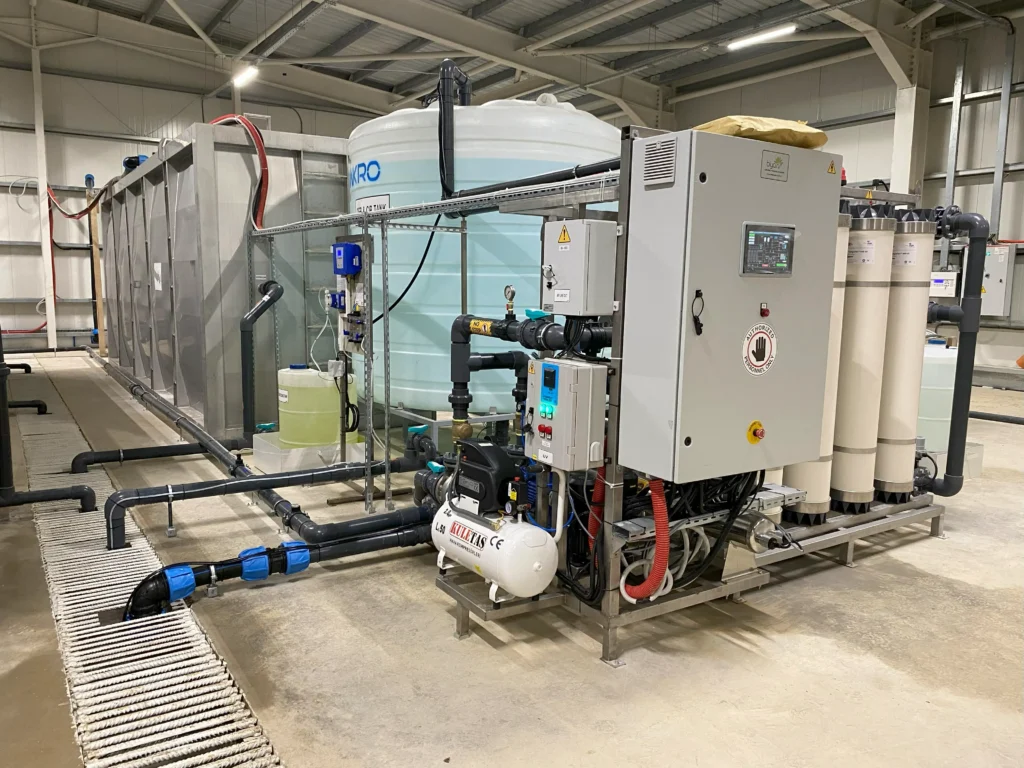
Stages of drinking water treatment:
- Pre-Treatment:
Screens and sieves: Large particles are removed.
Aeration: Dissolved gases in the water are removed, odors are eliminated. - Coagulation – Flocculation:
Small suspended particles in the water are clumped together with the help of chemicals (e.g., alum). - Sedimentation:
The clumped materials settle to the bottom and are separated from the water. - Filtration:
Remaining turbidity and microorganisms are removed by passing the water through sand or activated carbon filters. - Disinfection:
Remaining microorganisms in the water are killed using methods like chlorination, ozonation, or UV treatment.

