FILTER PRESS
The filter press is a high-pressure mechanical separation device used for sludge dewatering in wastewater treatment plants. Its primary function is to separate water from the sludge, leaving behind a dry, compact “sludge cake.”
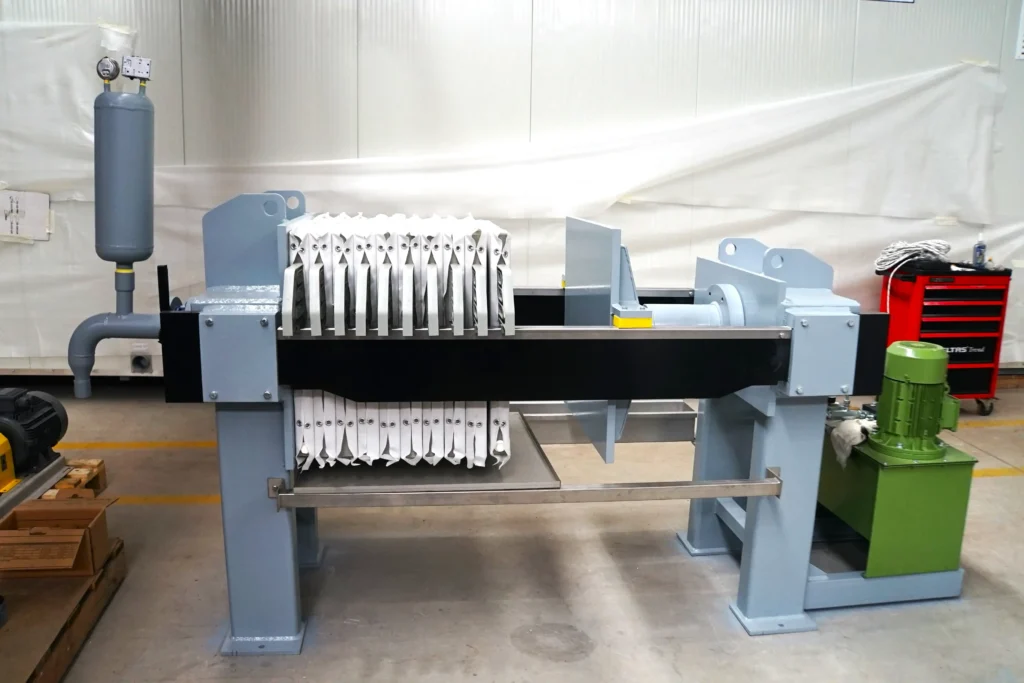
How a Filter Press Works:
- Sludge is pumped into chambers formed by plates and cloths of the filter press
- Under high pressure, water is filtered out through the cloths (as filtrate)
- Solids remain between the cloths and thicken
- After the cycle, plates open and the dry sludge cake is discharged
Main Components of a Filter Press - Hydraulic system (compresses the plates)
- Filter plates (typically made of PP or PE)
- Filter cloths (filter water, retain solids)
- Feed pump (pumps the sludge into the unit)
- Filtrate channels (outlet for separated water)
Achievable Solid Content
- Dewatered sludge can achieve 25–40% dry solids
- This is higher than many other methods
Advantages
- Very dry sludge cake (low volume, easy disposal)
- High performance in chemical sludge
- Very clear filtrate
- Low risk of odor and leakage
Disadvantages
- Slower compared to other methods (batch operation)
- High labor requirement (if manual cake removal is needed)
- Automatic systems can be expensive
- Regular cake removal and cloth cleaning required
Applications
- Industrial wastewater treatment plants
- Chemical sludge dewatering systems
- Municipal treatment plants (especially those using chemical precipitation)

