RO (Reverse Osmosis)
RO is a high-pressure membrane filtration method used in water treatment. Water is forced through a semi-permeable membrane under high pressure, separating dissolved salts, ions, heavy metals, organic substances, and microorganisms from the water.
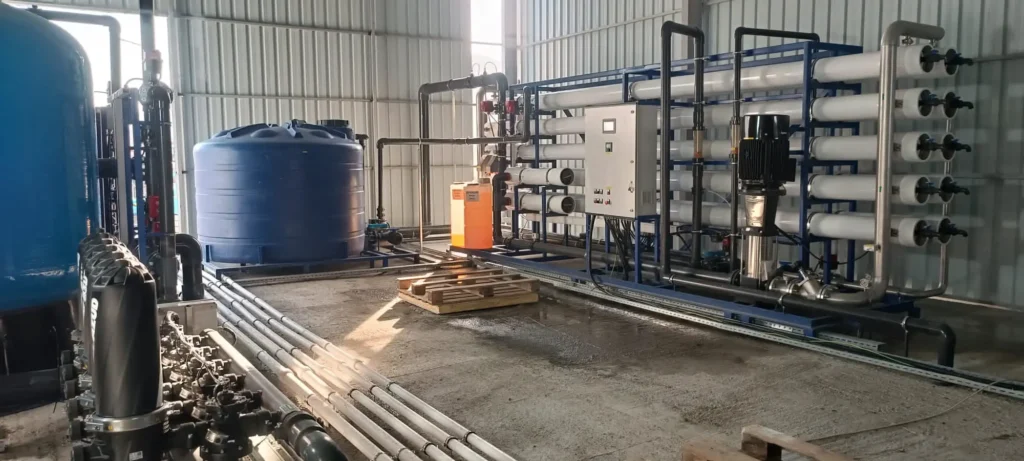
Key Features of RO Systems:
- Membrane pore size: Approx. 0.0001 microns
- Operating pressure: 4–70 bar (varies by application)
- Can remove:
– Dissolved salts (e.g., NaCl, CaSO₄)
– Ions (Na⁺, Cl⁻, Mg²⁺)
– Heavy metals
– Microorganisms
– Pesticides and certain organic compounds
Where is RO Used?
- Drinking water production (especially seawater and well water treatment)
- Industrial process water production
- Paint, textile, chemical, and pharmaceutical industries
- Wastewater recovery
- Boiler feed water preparation
Advantages:
- Produces very high-quality water
- Low chemical usage (especially as final treatment)
- Can remove 95–99% of Total Dissolved Solids (TDS)
Disadvantages:
- Requires high energy and pressure.
- Produces concentrated (salty) wastewater
- Requires regular maintenance and pretreatment (e.g., UF, filtration, softening)

